
Overview
Most digital data is held on disk drives. The performance of today’s Enterprise drives is a major limitation in servers, storage systems and high-performance computers. As a consequence, expensive solid-state drives (SSD’s) are threatening to replace disk drives in the most profitable segment – the enterprise.
Disk-IOPS technology enables a new category of disk drives which can compete with SSD performance in many systems, at a cost point which is compelling.
The Problem With Today's Disk Drives
Virtually all HDD’s today have a similar limitation to the first one ever made – the IBM RAMAC which first shipped over 50 years ago: only one head is reading or writing at any one time.
This restricts the number of operations per second that an HDD can perform – the actuator moves all the heads together. The fastest disk drives available can carry out less than 400 Input / Output Operations Per Second (IOPS). This is a major limitation for high-performance systems.
The Disk-IOPs Performance Leap
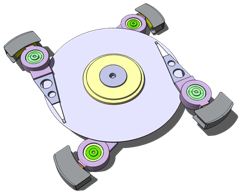
Multiple Actuator designs use all the existing Magnetic Recording technology investment to increase market share, keep generating revenue and produce an entirely new class of Disk Drive.
Head, Disk, Silicon, Firmware and Manufacturing technologies all benefit from re-use and an extension of their horizons. Disk-IOPS also has other patented improvements in disk drive design.
But What About Solid State Disks, aren’t they replacing HDD’s now?
In the last year, many articles have appeared predicting the imminent replacement of magnetic recording technology by Solid State Flash Memory. SSD’s certainly have important applications – but in volume and revenue terms, the experts and industry analysts agree that HDD-based magnetic recording will continue to provide over 90% of the world’s data storage capacity for at least another decade.
- The NAND Flash Memory silicon used in SSD’s is a highly volatile market (Flash prices have doubled in 2009), and the industry faces both major technology hurdles and huge capital investment requirements.
- Enterprise-class SSD’s will remain several times the price of Enterprise Disk Drives, and will be unaffordable for many high-volume applications.
The Disk-IOPS Business Approach
Our approach is pragmatic – we will license the patent portfolio (6 patents plus several applications) to existing HDD makers who have the design base, technology streams and skilled resources already established.
This shortens the time to revenue and minimizes investment, by avoiding the need to build an entire business including engineering, manufacturing, procurement, marketing, sales and support.
Designing and manufacturing disk drives is an extremely complex business with fierce competitors and massive barriers to entry – including Intellectual Property.
We do not intend to start a new disk drive company to design and make HDD’s.